- Home
- What is an X-ray? How Does an X-ray Work?
What is an X-ray? How Does an X-ray Work?
- March 13, 2026
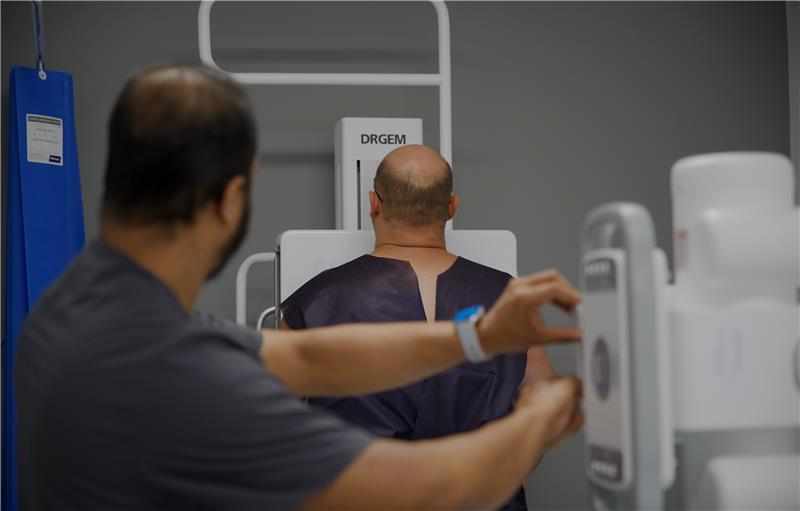
An X-ray, also known as radiography, is one of the oldest and most frequently used forms of medical imaging. It’s a quick, non-invasive procedure that uses a small amount of radiation to create images of the structures inside your body, particularly your bones. At Scope Radiology in Clayton, Victoria, we utilize state-of-the-art digital X-ray technology to provide clear, high-quality images that assist your doctor in making an accurate diagnosis.
How Does an X-ray Work?
X-rays use electromagnetic radiation to create pictures. When an X-ray beam passes through your body, different tissues absorb varying amounts of radiation. Dense materials like bone absorb more radiation and appear white on the image. Softer tissues, such as muscle, fat, and organs, absorb less and appear in shades of grey. Air, like in your lungs, appears black.
Our digital X-ray system offers several advantages:
- Faster Results: Images are available almost instantly.
- Lower Radiation Dose: Digital systems often require less radiation than traditional film X-rays.
- Enhanced Image Quality: Allows for better detail and easier manipulation (zooming, adjusting contrast) for clearer diagnosis.
- Environmentally Friendly: No chemical processing is required.
Common Uses of X-rays
X-rays are incredibly versatile and are used to diagnose a wide range of conditions, including:
- Bone Fractures and Breaks: The most common use, quickly identifying bone injuries.
- Joint Injuries: Assessing dislocations, arthritis, and other joint problems.
- Chest X-rays: Detecting lung conditions like pneumonia, bronchitis, tuberculosis, and lung cancer, as well as heart size and shape.
- Abdominal X-rays: Identifying issues like kidney stones, bowel obstructions, or swallowed objects.
- Dental X-rays: Used by dentists to check for cavities and other dental problems.
Preparing for Your X-ray Appointment
Generally, very little preparation is needed for an X-ray. Here’s what you should know:
- No Fasting: You can usually eat and drink normally before your X-ray.
- Medications: Continue to take your regular medications unless otherwise advised by your doctor.
- Clothing: Wear loose, comfortable clothing. You may be asked to remove jewelry, eyeglasses, and any metal objects, as these can interfere with the X-ray images. Depending on the area being examined, you might be asked to change into a gown.
- Pregnancy: If there is any chance you could be pregnant, please inform your doctor and our radiographer immediately. While the radiation dose is small, precautions may be necessary.
- Referral: Always bring your valid doctor’s referral to your appointment.
What to Expect During the Procedure
When you arrive at Scope Radiology Clayton for your X-ray:
- Check-in: Our friendly reception staff will greet you and confirm your details and referral.
- Preparation: A qualified radiographer will explain the procedure and position you correctly. You may be asked to stand, sit, or lie on a table.
- The Scan: You will need to remain very still for a few seconds while the X-ray is taken. You may be asked to hold your breath briefly. The process is quick and non-invasive.
- Completion: Once the images are captured, you can usually leave immediately and resume your normal activities.
Your Results
After your X-ray, our Radiologists will carefully review and interpret your images. A detailed report will then be sent to your referring doctor, typically within 24-48 hours. Your doctor will discuss the findings with you and explain what they mean for your health and any next steps.
At Scope Radiology in Clayton, we are committed to providing efficient, accurate, and compassionate X-ray services. Our advanced digital technology and experienced team Aim to provide you receive the highest standard of care for your diagnostic needs.
Frequently Asked Questions (FAQ)
Yes, modern X-ray technology uses very low doses of radiation, and the benefits of an accurate diagnosis typically outweigh the minimal risks. Our radiographers take all necessary precautions to minimize radiation exposure.
While appointments are preferred, Scope Radiology often accommodates walk-in X-ray services. It’s always best to call ahead or check our website for current walk-in availability.
If you are pregnant or suspect you might be, it is crucial to inform your doctor and our staff immediately. While X-rays are generally avoided during pregnancy, if medically necessary, specific shielding and precautions will be taken to protect the baby.
The actual X-ray exposure only takes a few seconds. The entire process, including preparation and positioning, usually takes about 5-15 minutes, depending on the area being examined.
Scope Radiology offers bulk billing for many eligible X-ray services. Please bring your Medicare card and valid referral, and our reception staff can advise you on your eligibility and any potential out-of-pocket costs.