
CTCA (CT Coronary Angiography)
- Home
- Our Services
- CTCA (CT Coronary Angiography)
Services
Indications
Your doctor may recommend a CTCA if you have:
- Chest pain with a low to intermediate chance of heart artery disease
- Unexplained shortness of breath or an abnormal stress test that needs clarification
- Strong family history of early heart disease
- Risk factors such as high blood pressure, diabetes or high cholesterol
- Pre‑operative heart assessment or review of bypass grafts/stents
- Atypical symptoms that could be heart‑related
What is a CTCA?
CT Coronary Angiography is a non‑invasive heart scan that shows the coronary arteries—the blood vessels that feed your heart. The scan is timed with your heartbeat so images are taken when the heart is still. You receive contrast dye (iodine) through a small tube in your arm to outline the inside of the arteries. You may be given a short‑acting medicine to gently slow the heart rate and a small under‑the‑tongue spray that relaxes the heart’s arteries (nitroglycerin). These steps help make the pictures sharp and clear so we can see any narrowing or plaque that could reduce blood flow. In some patients, a calcium score may also be done to look at overall plaque burden.
What Can I Expect During the Test?
On arrival we check your heart rate and blood pressure. If your heart rate is above about 60–65 beats per minute, the temporary medicine to slow it may be given; it can take 45–90 minutes to work. Small sticky pads are placed on your chest to record your heartbeat and a small tube is placed in a vein for the contrast dye. Just before the scan, you may receive the under‑the‑tongue spray that relaxes the heart’s arteries.
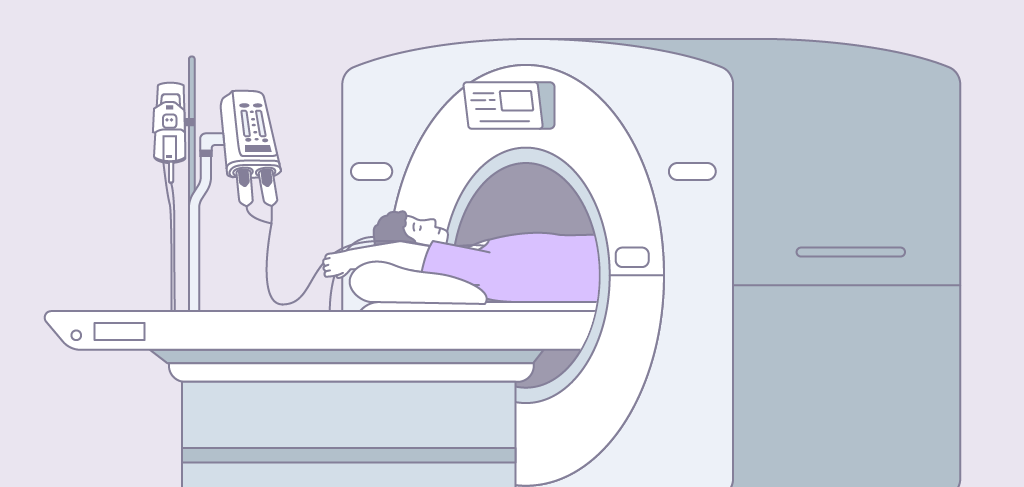
You’ll lie on the CT table and follow short breath‑hold instructions (usually 5–15 seconds). The scan itself takes about 20 minutes, and you’ll be observed for a short time afterwards before going home.
What are the Risks of the Test?
CTCA uses more radiation than a plain X‑ray. Scope Radiology uses ultra‑low‑dose cardiac CT techniques to keep exposure as low as possible while still getting high‑quality images. Reactions to contrast dye or the short‑acting medicines are uncommon; a doctor is on standby and our team is trained to treat any reaction promptly. The under‑the‑tongue spray can cause a brief headache or light‑headedness that settles quickly. Serious complications are rare.
Preparation
(This appointment will take 2–3 hours, including preparation and post‑scan observation.)
Hydrate well; fast for 2 hours before your appointment (water allowed).
Avoid all caffeine for 24 hours before your appointment (no coffee, tea—including herbal—chocolate, cola or energy drinks).
Avoid smoking for 12 hours prior.
Avoid strenuous exercise on the day of your scan.
Do not take erectile dysfunction medicines before your scan: Viagra (sildenafil), Cialis (tadalafil), Levitra (vardenafil), Spedra (avanafil). The exact timing depends on the medicine; this is commonly 24–72 hours. We will confirm your timing when we book your scan.
Take your regular medicines unless instructed otherwise and bring a current medication list.
Bring recent kidney function tests if available, and wear comfortable clothing without metal near the chest.
Request an Appointment with Scope Radiology.
Call us or submit a request form to make an online booking.
Request an Appointment with Sleepscope.
Call us or submit a request form to make an online booking.